

Stop Calling Oats the Healthiest Breakfast: For years, oats have enjoyed celebrity status in the world of healthy eating. From Instagram-worthy smoothie bowls to overnight oats packed in mason jars, the grain has been marketed as the ultimate “clean” breakfast choice. Fitness influencers swear by it, diet plans revolve around it, and supermarket shelves are stacked with oat-based products promising weight loss, heart health, and glowing skin.
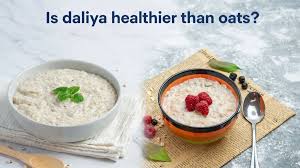
But a recent viral Instagram video by nutritionist Saloni has sparked a fresh conversation. In her post, she compares oats with a more traditional Indian staple — daliya (broken wheat) — and argues that daliya offers nearly identical nutritional benefits at almost half the price. Her bold claim has triggered debate: Have we over-romanticised oats while overlooking our own local grains?
Let’s break down the comparison and explore whether daliya really deserves the spotlight.
What the Numbers Say: Oats vs. Daliya
In her video, Saloni compared the nutritional values per 100 grams of both grains. Here’s how they stack up:
Protein Content
- Oats: 13g
- Daliya: 12g
The difference is minimal. Both grains offer comparable plant-based protein, making them good options for a filling breakfast. While oats slightly edge ahead, the 1g difference is hardly significant in daily consumption.
Fibre
- Oats: 10g
- Daliya: 10–12g
Fibre plays a crucial role in digestion, blood sugar control, and satiety. Both grains deliver strong fibre content, supporting gut health and helping you feel full for longer. In fact, daliya may slightly surpass oats depending on the variety.
Also read: AI Threatens the Finance Industry’s Perpetual Profit Machine
Fat Content
- Oats: 7g
- Daliya: 1–2g
This is where daliya clearly stands out. Oats contain naturally occurring fats, which are not unhealthy but do increase overall calorie density. Daliya, on the other hand, is significantly lower in fat.
Calories
- Oats: 380 kcal
- Daliya: 350 kcal
Again, the difference isn’t massive, but daliya is slightly lower in calories per 100 grams.
From a purely numerical standpoint, the two grains are nutritionally very similar. Oats may have a marginal protein advantage, while daliya is lower in fat and calories. Fibre content remains comparable.
The Price Gap: A Major Talking Point
Where the debate becomes more intense is in pricing.
- Oats: ₹150–200 per kg
- Daliya: ₹70–80 per kg
That’s more than double the price for oats in many cases.
Saloni argues that this price difference reflects marketing more than science. Oats, often imported and branded as a “superfood,” have been glamorised in urban wellness culture. Meanwhile, daliya — a long-standing Indian household staple — is viewed as ordinary or outdated.
The cost comparison raises an important question: If two foods offer similar nutrition, does it make sense to pay significantly more for one simply because of branding?
Are Oats Overrated?
To be fair, oats are undeniably nutritious. They contain beta-glucan, a type of soluble fibre known to support heart health and lower LDL (bad) cholesterol. They are versatile, quick to prepare, and widely available in various forms.
But daliya is also a whole grain. Made from broken wheat, it contains complex carbohydrates, fibre, and plant protein. It is minimally processed and fits seamlessly into traditional Indian diets. It can be prepared sweet or savoury, much like oats.
Previous generations consumed daliya regularly without labeling it a “superfood.” Yet it contributed to balanced, nutrient-rich meals.
The broader issue may not be about which grain is superior — but about how modern marketing influences our perception of food.
The Real Problem Isn’t the Grain
Saloni makes an important point: no single grain determines your health. Instead, overall dietary patterns matter more.
Health outcomes depend on factors such as:
- Portion sizes
- Cooking methods
- Added sugars and oils
- Overall calorie intake
- Physical activity levels
- Sleep and stress management
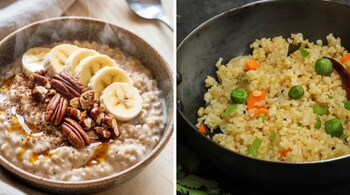
For example, oats cooked with excess sugar, flavored syrups, and processed toppings may be less healthy than a simple bowl of vegetable daliya cooked with minimal oil.
Similarly, overeating any grain — even a whole grain — can lead to excess calorie intake.
The “Superfood” Mindset
The viral comparison taps into a larger trend in nutrition culture — the obsession with “superfoods.” Imported grains like quinoa, chia seeds, and oats often receive a health halo, while traditional local staples are dismissed as basic.
Yet nutrition science consistently emphasizes one key principle: whole, minimally processed foods are the foundation of good health, regardless of whether they are imported or locally grown.
Daliya may not have flashy marketing campaigns, but it is nutritionally sound, affordable, and culturally rooted. In many ways, its simplicity is its strength.
So, Which Should You Choose?
The answer is refreshingly simple: choose what fits your lifestyle, taste, and budget.
- If you enjoy oats and find them convenient, they remain a healthy breakfast option.
- If you prefer daliya, there is absolutely no nutritional reason to replace it with oats.
- If affordability matters, daliya offers excellent value without compromising nutrition.
Both grains can be made healthier by pairing them with:
- Protein sources (nuts, seeds, yogurt, eggs)
- Healthy fats (nuts, seeds, limited ghee)
- Seasonal fruits or vegetables
Balance matters more than brand.
Read about: WellBe Foods Expands Healthy Snacking Portfolio with Millet-Based Snack Launch
A Reminder About Sustainable Health
Social media often thrives on extremes — labeling foods as “best” or “worst.” But real nutrition rarely works that way.
Sustainable health is built on:
- Consistent habits
- Balanced meals
- Moderation
- Cultural familiarity
- Affordability
If a food fits into your routine and supports your long-term consistency, it is likely a good choice for you.
Final Thoughts
Nutritionist Saloni’s comparison does not prove that oats are unhealthy or that daliya is magically superior. Instead, it highlights an important truth: we often overlook traditional, affordable foods in favor of trendy alternatives.
Daliya and oats are both whole grains with comparable nutritional value. The difference lies less in science and more in perception and pricing.
Before switching your breakfast based on a viral reel, it may be worth remembering that good health doesn’t depend on a single ingredient. It depends on overall lifestyle patterns.
Sometimes, the healthiest choice isn’t the one trending on social media — it’s the one that has quietly nourished generations.